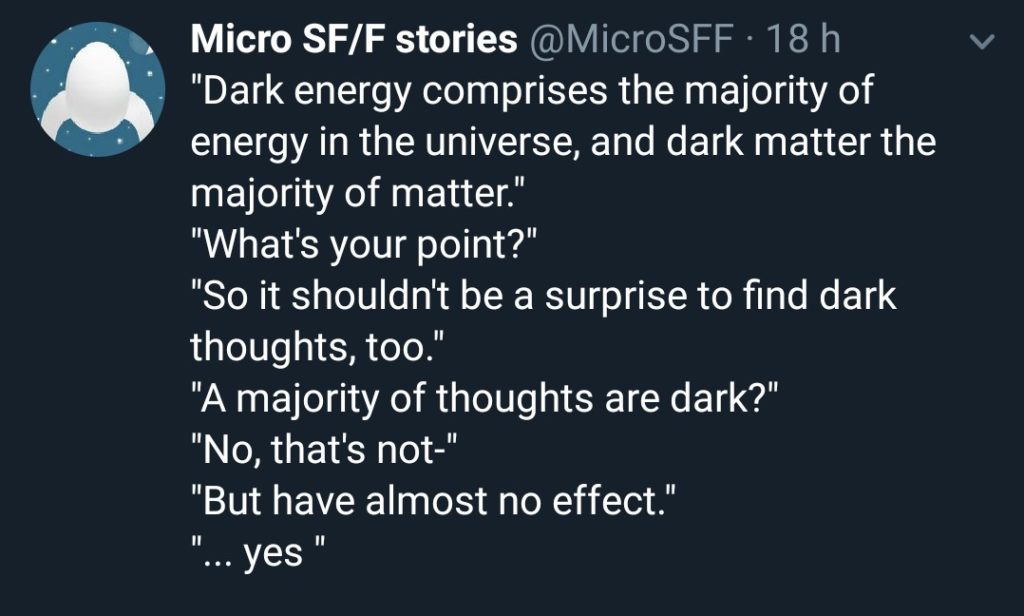
I want to keep this one in mind
Un truc hyper important dans une newsletter de Nicolas Galita, qu’il faudrait encadrer :
La neurodiversité n’est pas juste un mot cool pour dire « y’a des cerveaux différents », c’est un concept militant qui affirme que certaines personnes sont oppressées de manière systémique en raison de leur neurologie. Ces personnes, les neurodivergentes, sont pensées comme une catégorie similaire à la race sociale, au genre, à la classe sociale.
Ce n’est pas la différence le problème. Tous les cerveaux sont différents. Ça n’existe pas un cerveau neuroconvergent.
Les neurodivergents sont celleux qui sont marginalisé·es par la neuronorme. Quand tu es autiste, le monde n’est pas pensé pour toi. Quand tu es TDAH, le monde n’est pas pensé pour toi. Tu es donc handicapé·e.
Ce n’est pas non plus une histoire de minorité. De la même manière que, sur Terre, les hommes sont en minorité et les blancs ne sont que 10% environ mais sont bien les privilégiés.
Le concept clé ici est l’oppression systémique.
Nicolas Galita, Les HPI ne sont PAS neuroatypiques, newsletter du 13 janvier 2026
Ca résonne avec les articles de Jon (Christinanity On The Spectrum) qui dénonce la « vibe » actuelle autour de l’autisme type 1, où des gens se reconnaissent autistes pour un prétendu « super pouvoir » imaginé (et sans doute un mal-être dans la vie, mais plus probablement dû à d’autres oppressions sytémiques), et où des coachs ciblent cette catégorie pour vendre du développement personnel.
PS: garder à l’esprit que l’autisme type 1 c’est dans le « spectre » avec l’autisme type 2 et type 3. Cela permet, je trouve, de se prémunir de ce genre de pensée. Se méfier dès que quelqu’un dit « non, pas comme ces autistes-là« .
Je poursuis mes lectures sur l’autisme et je note quelques citations qui ont particulièrement résonné. Elles m’interrogent sur la distinction entre « l’autisme est un diagnostic et un handicap intrinsèque » vs « l’autisme me définit en tant que personne et c’est la société qui en fait un handicap extrinsèque (en ne s’adaptant pas) ».
Autism is best thought of as a set of reinforcing feedback loops that slowly build on each other and calcify over time into a set of traits. It is primarily a neurodevelopmental disorder, but it isn’t just a neurodevelopmental disorder. If you actually want to understand autism, you have to understand how it changes the way people interact with their environment. You need to account, not just for the biological components of development, but also for how an autistic person’s environment interacts with them, and how these factors interact and play into each other. The end result is that, by the time you are an adult, there is no “autism” that can be separated from “you,” and removing the autism would mean that who you have become through your development and your relationship with the world would cease to exist.
Many of us get a lot better at managing autism as we get older, more mature, and more experienced. It isn’t so much that we become less autistic than that we get much better at controlling how the same level of autism presents and manifests. But this just involves making the symptoms of a social disorder seem less severe, rather than curing anything.
Eleven years ago, I would have had a similar reaction. I would have said that I liked being autistic, that to cease to be autistic would be to cease to be me, and that I liked being me. I would have probably also given a long lecture about how the social struggles autistic people face are not due to any inherent problem with the autistic brain but with the barriers and the stigma society places on neurominorities.
A lot of my enthusiasm for the neurodiversity interpretation of autism arose because I couldn’t handle the alternative. The idea that there wasn’t actually anything wrong with me, but that I lived in an intolerant society that could be reformed, was extremely comforting.
Eventually, I had to concede that there were a lot of aspects of autism that were just inherently bad. There is no case in which having a severe intellectual disability is preferable to not having one, or in which being hypersensitive to sound, light, smell, and taste is preferable to not having those issues.
Autism self-advocates will talk about how hard it is to have autism, how they are unfairly treated by the world, and how they are oppressed, mistreated, and abandoned by a world that doesn’t understand them. Their apparent positivity comes from their reframing this hardship as not being a problem of autism but of society.
Disability accommodation for autistic people does not just require the reordering of your physical environment. It requires reordering social norms and personal preferences, and for people to provide grace and tolerance to people who are often upsetting, rude, difficult, and incomprehensible.
I live in a society of people who have the ability to more or less intuitively interpret and parse each other’s non-verbal communication, so much so that access to that ability is assumed, and I don’t have that ability. My brain is hyper-literalistic, hyper-systematizing, singularly focused, extremely resistant to change, unable to filter background noise, lacking any sense of social intuition, and governed by a need to stick to patterns and routines. These traits are, in almost every single context, maladaptive with some very minor exceptions. These traits will likely continue to be maladaptive in all future contexts.
When people ask me what it is like having autism, my short answer is that I have a collection of maladaptive neurodevelopmental traits that make my life worse. If I was given a magical button that would make me gradually less autistic over time, why wouldn’t I press it?
https://dispatchesfromtheautismwars.substack.com/p/i-would-cure-my-autism
Discourse about autism diagnoses usually revolves around one of several endlessly repeated talking point :
– Autism is overdiagnosed
– Autism is actually underdiagnosed and you’re ableist for saying otherwise
– Diagnoses are an ableist construct and autism self diagnosis is 100% valid
(…) Lost in the mess of discourse is a pretty fundamental question- what is an autism diagnosis for? This might seem like a stupid question for anyone with a Level 3 child, or for someone who’s required lifelong speech therapy and special education, but for those of us who were diagnosed late, or just given the label “Aspergers” without much help beyond an IEP, I suspect it’s a fairly pressing issue.I had always had an inflated opinion of my own intelligence, though several years of struggling to keep my grades up had punctured that. But now I felt like I was part of an elect- a special group of people with special brains, and not in the derogatory way “special” usually connoted. I had been marinating in internet culture since I was 12 and the idea that Aspergers was basically the equivalent of being one of the X-Men had fully taken root in my brain by then.
This lasted for maybe four years before the contradictions began to build up and I began to become increasingly disenchanted with neurodiversity. But even then I still clung to the idea that the diagnosis was my identity and that most of my issues were beyond any psychological or medical help.
Of course the diagnosis was certainly helpful in getting me into community with other autistic people both online and in real life, I can’t help but wonder why I was slapped with such a serious label with so little follow up. It’s really no wonder that people are seeking out these diagnoses- a psychiatric label with no treatment protocol probably does sound like a golden ticket for people who are sick of being told to go to therapy.
On an individual level, yes, it’s helpful to remind yourself to be aware of your limitations, that you have value in spite of them, but you have to acknowledge that they are limitations! If your personal well being relies on other people not improving their own, then odds are you aren’t actually doing very well at all.
It’s honestly understandable that people would default to an identitarian view in the face of such a frustrating label.
https://etanaedelman.substack.com/p/what-is-an-autism-diagnosis-for
Pourquoi ça me parle ?
Finalement, mon expérience et ces dernières lectures me donnent le sentiment que l’autisme est plus ou moins récupéré par le marketing du développement personnel mais sans vraie solution pour mieux s’intégrer dans la société et pour moins souffrir (alors que pour le TDAH, il existe des aides possibles, y compris médicamenteuses).
Enfin, je passe rapidement, en lisant l’article, sur un mention concernant le X-fragile, et le mot réveille un souvenir, mais pas du tout lié à l’autisme. Je fais une rapide recherche Google :
Le syndrome de lX fragile est une pathologie génétique qui concerne environ une naissance sur 2 500 à 4 000. Elle résulte de la mutation ou de l’absence d’une protéine, FMRP, codée par un gène situé sur le chromosome X.
Cette maladie se caractérise principalement par un déficit intellectuel de degré variable. Autre fait important, le syndrome du X fragile constitue la première cause « monogénique », c’est-à-dire liée à des anomalies au niveau d’un unique gène, du trouble du spectre de l’autisme (TSA).
https://www.frm.org/fr/projets/tsa-mieux-comprendre-origines
En réfléchissant plus longuement, je me rappelle d’un RDV avec une spécialiste de la fertilité que je consultais pour une ménopause précoce (avant 40 ans). Après avoir retourné tout mon bureau, je retrouve enfin l’ordonnance de 2019 pour un caryotype sanguin et recherche de mutation FMR1 (syndrôme X fragile). Sauf que… cette ménopause précoce n’étant pas forcément problématique, et n’y cherchant pas forcément de solution, je n’ai pas utilisé l’ordonnance ! Et là, LE REGRET !
L’info est néanmoins intéressante, et ajoute un nouveau point dans ma constellation des éléments à explorer.
Quelques articles de blog qui me donnent envie d’écrire, mais je ne sais pas encore comment, alors je vais commencer par quelques citations.
https://dispatchesfromtheautismwars.substack.com/p/the-gentrification-of-level-1-autism
The new wave of neurodiversity activists want you to know that they aren’t like those other autistics.
I did not like the book “Unmasking Autism” by Devon Price.
Unmasking Autism is not the only culprit in the gentrification of ASD 1: this has been a trend since 2016, once the autism wars decisively shifted in favour of neurodiversity and activists got bored and started looking for their next thing. While I wouldn’t recommend it to anyone, in an ethnographic sense it is a really good book. It exemplifies the type of thinking that you find in modern autism self-advocacy perfectly. If I were to try to sum up its purpose in one sentence, I would say that it exists to give people who do not seem to have autism permission to identify as autistic. I don’t think that this is necessarily a bad thing; it can often be very important work to do. Many people who legitimately have autism do not look like a stereotypical case of autism.
It is good to ensure that a very obviously autistic woman does not entirely reject the idea that she might be autistic because she cannot measure up to the platonic ideal of Hans Asperger’s finest warrior in her mind’s eye. This readjustment can, however, be taken to such an extreme that autism, a diagnostic category defined solely by observations of external behaviours, is redefined to include people who show no external signs of autism because they are (supposedly) masking this behaviour.
Masking is a real phenomenon within autistic populations. It has a lot of genuine use and explanatory power and is based in real clinical observation. Unfortunately, like most good and interesting ideas about autism, people within autistic communities take the idea and stretch it beyond all credulity. Most autistic people that I interview and interact with wildly overestimate their ability to hide their autism.
Price’s autism is autism without the deficits. In some ways, the subtitle of the book, “Discovering the New Faces of Neurodiversity,” actually does a good job of explaining what the book is. It is about the New Autistics™, the ones so minimally impacted by autism that no one noticed that they had it. This phenomenon is perhaps best typified by a Reddit post on /r/autism about the book, which contains the line, “Most of the stories and people in the book are so highly functioning and so privileged that I thought I put on some Hollywood movies podcast.”
Because the brand of autism has been sullied by weird nerds, it is not possible to co-exist with us; instead, autism must be redefined. This attempt at redefinition happens so often in Price’s book that at least twenty of my notes on it were some variation of, “Yes, yes, I get it; you aren’t like those autistics.”
Why aren’t some forms of thinking and feeling innately bad? I can list a lot of my autistic thinking tendencies that are innately bad. Basically every form of autistic thinking has a lot of innate, articulable downsides. Humans are a species that evolved to be social; not being able to read or understand social cues and signals is bad. Getting irrationally upset and screaming at your classmate when they mispronounces a word is innately bad. Freaking out because someone interrupted your routine instead of being able to go with the flow is bad. Not being able to engage in reciprocal communication with someone that you like and care about, who needs reciprocal communication to feel loved and cared for, is bad. Not knowing what your friend is feeling or thinking and saying something that makes them feel worse has no innate goodness to it.
This version of autism is so mild, so divorced from the realities of impairment, that it is not clear why anyone should care that you have it or offer any accommodation.
If people like Price insist that autistic people don’t actually have intrinsically bad traits, that autism doesn’t actually lead to these maladaptive behaviours, autistic people who have these problems will not be able to identify and fix them. We will also get locked out of the social grace and accommodations that we need while trying to improve ourselves. Instead of understanding, we will be met with responses of, “What is your excuse? Autism doesn’t do that,” or, “Well, my friend is autistic, and they don’t do that.” The logic of accommodating autism in social situations relies entirely on the premise that we would be doing otherwise if we had that capacity to understand our errors. We are not intentionally being cold, aloof, obtrusive assholes; something is happening in our brains that doesn’t happen in other people’s. When we make a mistake and say and do things that we should not, the last thing we need is for the Devon Prices of the world to descend from the rafters to explain that autistic people are not actually obtrusive assholes and are actually confident, self-possessed, and brave. We are often obtrusive assholes. Obtrusive assholes who are nonetheless human beings with a neurodevelopmental disorder that is very difficult to manage and who need to be accommodated. The cost of redefining autism is borne by those who need the label the most. Redefining autism to exclude its negative symptom because they embarrass the least disabled autistic people is harming those of us who do not have the luxury of denial.
https://dispatchesfromtheautismwars.substack.com/p/the-gentrification-of-level-1-autism
https://freddiedeboer.substack.com/p/the-gentrification-of-disability
In the early 2010s there was a flurry of interest in autism. Dozens of books and hundreds of essays were written about autism, almost all of which talked about it as a set of valuable personality quirks rather than as a disorder. In article after ponderous article, autism was described as a newer, perhaps better way of thinking, sometimes even a “new evolution” for the human species. Always, always, always, this navel-gazing fixated relentlessly on the highest-functioning people with autism. You could read tens of thousands of words in this genre without ever once being informed about the existence of those whose autism debilitates them. Whenever I read yet another article talking about how some high-achieving computer scientist saw their autism as the key to their success, I would think of those whose autism has prevented them from enjoying all manner of elements of human life. (…) And since “autism is not a disorder” has become the enforced opinion, those whose autism plainly is a disorder have to be marginalized – by the very people who complain about the marginalization of the “neurodiverse.” Autism has been gentrified.
In Bergner’s piece, and in the minds of readers who don’t know any better, those people are voiceless – while the voices in the heads of the higher-functioning are given plenty of attention.
We used to say, “you wouldn’t stigmatize someone with diabetes, would you?” And there was wisdom in that. An obvious corollary is that you wouldn’t make having diabetes core to your identity, either; you wouldn’t try to sell diabetes as the most interesting thing about you. I don’t know why we walked away from that insight.
I have never said and would never say that ADHD, anxiety, depression, or any other mental illnesses are anything less than painful, inspiring of compassion, and deserving of free and accessible treatment.
Of course the high-functioning have a right to partake in the discussion. But something is truly lost when the public face of mental illness ceases to be a schizophrenic person struggling to maintain their grasp on self-control and becomes instead a member of the professional class who tells jokes about their Ritalin consumption online and labels themselves #neuroatypical on Tinder.
When I talk about this stuff and I bring up people who are too debilitated to even take part in this conversation, when I question whether we should be so sunny about mental illness given that such people exist, I am frequently told, “well, I’m not talking about them.” To which I say, precisely.
https://freddiedeboer.substack.com/p/the-gentrification-of-disability
https://dispatchesfromtheautismwars.substack.com/p/how-i-learned-to-stop-worrying-and
I formalised this insight into a plan which I dubbed Operation Be Normal.
It also turned out that I could not predict what kinds of imitation would work or not.
It also involved replaying conversations after they happened to figure out what I said and what my brother, in similar conditions, would have said. I spent a lot of time inventing hypothetical scenarios, or replaying ones I commonly found myself in, and running through the types of things that I might need to say. In front of a mirror, I would then practice saying those things out loud over and over.
Learning how to make jokes turned out to be an incredible adaptive camouflaging strategy in a way I would have never initially predicted.
While I transferred for the classes, a new school had the pleasant side effect of allowing me to get a new social start unmarred by my last ten years of persistent spergery.
(…) and then as soon as I was able, I absconded to the basement to Google Asperger’s Syndrome. I read the Wikipedia article and felt a pit in my stomach. As I had suspected in seventh grade, there was indeed something wrong with me. Not only was there something wrong with me, it also had a specific name.
Inside of me there was a scared autistic child, worried that once again he would be excluded. That child wanted nothing more than to finally be understood and known by others. He yearned for acceptance, to be seen for who he was, and naively hoped that one day he would find it. I had had this idea that understanding, friendship, and social acceptance were locked behind a series of rituals, and the reason that I had not been successful was because I couldn’t get the rituals right, but if I finally mastered the correct sequences, postures, and phrases, I would get what I so desperately desired. But I realised that this was a fantasy. No matter how hard I tried, people would eventually figure out that I was different—that I was not of them—and I would once again become an outsider. This pattern had been repeating ever since I began masking.
I had been burning all of my energy and attention trying to skin-walk my brother, my peers, and the people around me, thinking that, if I tried hard enough, one day I could pass as one of them. But my goal, all this time, should have been to be accepted as a foreigner, which is an entirely different problem set. I realized that I still needed to mask, but the mask I needed to wear was entirely different from the one I was trying to wear. I had been suppressing the wrong set of traits, trying to emulate others that would never fit well on me, and ignoring a lot of others that could really play well to my already existing strengths. Masking, I realized, wasn’t bad in itself. It was an optimization problem.
While most of them thought I was weird, by their own reports, they also thought I was smart, reliable, and competent.
I had come a very long way from the inception of Operation Be Normal. To a large extent, this operation, while fraught with misadventures in the beginning, turned into a resounding success in ways that I could have never hoped when I first started it. It never actually achieved its intended goal of allowing me to be normal, or at least benignly confused for a normal person. It did, however, allow me to develop the social skills, awareness, and compensation mechanisms to get to the point where my deviation from the norm didn’t matter. I often wish I could go back in time to twelve year-old me and tell him that he had a problem, that it was called Asperger’s, and it was nothing to fear. The challenges I was facing and would face in the future, while not common, were also not unique. There were answers, solutions, interventions, and pathways that he could take that, while they would not solve his problems on a fundamental level, they would make the world a more tolerable place.
https://dispatchesfromtheautismwars.substack.com/p/how-i-learned-to-stop-worrying-and
Dans le chapitre « Dans les médias », Emilia Roig parle des campagnes marketing qui se sont mises à surfer sur la vague du body positive. La nouvelle injonction a été d’accepter tous les corps, minces comme gros, jeunes comme vieux, passant d’un discours où les femmes devaient être belles, à une injonction à se sentir belles.
Or si l’empowerment ne passe que par une décision et une responsabilité indiviudelle, il ne s’attaque pas aux racines du problème et ne fait qu’augmenter la pression sur les personnes ne correspondant pas à la norme. Cela devient notre faute si nous ne parvenons pas à tout simplement ignorer les stigmates, les discriminations et les rabaissements quotidiens. (…) Dans ce cas, l’empowerment se résume à poster un selfie avec le hashtag #bodypositive sur Instagram.
Mais que deviennent les structures du pouvoir et les discours qui oppriment ? (…)
L’empowerment se voit ainsi réduit à des actions superficielles et individuelles : « Tout est dans la tête, il suffit de t’aimer ». (…) Une fois de plus, on tourne en rond : le problème, ce sont les femmes et leur « mental ». Passent à la trappe les conditions sociales, les systèmes d’oppression, les discours patriarcaux, racistes et néolibéraux qui les ont rendues impuissantes. Cette rhétorique est une forme de gaslighting, où on vous explique que la honte et le rabaissement qui viennent de l’extérieur sont « dans votre tête ».
« L’envers du monde. Défaire les dominations, repenser la justice », par Emilia ROIG
En lisant ces phrases, je me suis demandée si c’était également vrai pour l’autisme, à la lumière des articles de blog partagés plus haut. Etant donné que je suis « à haut niveau de fonctionnement » (comprendre: j’ai un masking à peu près acceptable tant que je suis dans certaines limites de ma zone de confort), la charge de ne pas demander d’aide, de rester dans mes limites, ne repose que sur moi. Et si parfois je n’y arrive pas, c’est de ma faute.
J’ai beaucoup travaillé sur la relecture de mon enfance / adolescence et jusqu’aux premières années de couple et de maman. Certaines évolutions et changements dans ma vie m’ont emmenée dans une voie où les choses devenaient plus facile (partir en école à 1000km pour repartir à zéro en étant sûre que personne de mon passé ne me rattraperait et ne monterait les gens contre moi ; trouver un métier adapté à ce que je sais faire le mieux et y être reconnue pour ma compétence professionnelle et non sociale).
Je sais quelles situations éviter pour ne pas être mal. mais cette charge repose entièrement sur moi, sans aucune aide extérieure. Et comme j’aimerais, parfois, arriver à me détendre et à me reposer sur des gens, sur des aides, pour ne pas être en alerte permanente.
J’ai essayé de comprendre quelles étaient mes forces et mes compétences, et j’ai réussi à m’aimer. Mais je ne m’aime pas pour mon autisme. Je n’aime pas mon autisme. Si je devais recommencer, je renoncerais sans doute à tous ces habiletés si je pouvais être normale, avoir des amis, être jolie, populaire, ne pas être bizarre, ne pas se poser à chaque instant la question « et là, ce que je fais, c’est acceptable socialement ? », ne pas rejouer tous les moments pénibles dans ma tête le soir (« c’est CA que j’aurais dû dire ! ») à en perdre le sommeil.
Et tout à coup, je repense à mon article sur l’opération des yeux, et sur le fait que j’ai toujours pensé que c’était juste le fait d’être intello avec des lunettes qui m’avait mise à l’écart. Je me demande si la phrase finale ne s’appliquerait pas tout autant à mon diag autiste :
Je me demande combien de temps il me faudra pour m’habituer. Mais ça ne me rendra pas les moments que j’aurais pu vivre dans mon enfance si tu m’avais laissée être normale, juste normale… comme tout le monde.
https://blog.sfourmi.net/index.php/2012/10/21/18-octobre-2012/
Anne Frank, ma meilleure amie
The Woman in the House Across the Street from the Girl in the Window
The House
Big bug
Adam à travers le temps
The Dig
Serviteur du Peuple
Turning Point : Le 11 septembre et la guerre contre le terrorisme
Le dernier vol de la navette Challenger
After Life S3
Panique à la centrale Three Mile Island
Love Death Robots vol3
Crazy ex girlfriend
Umbrella academy S3
Worth
Le chant du loup
Inventing Anna
Ava
Manifest
Echoes
Appolo 11
Kitz
Biohackers
Uber weihnachten
The Crown
Wendell & Wild
L’impératrice
1899
Katla
The Playlist
Emily in Paris S3
The Weekend Away
Salvation S2
Death to 2020
Lupin
Horse girl
Mulholland drive
Penguin Bloom
The social dilemma
The terminal
I care a lot
Behind her eyes (mon amie Adèle)
Zoe
Quoi qu’il arrive, je vous aime
13 novembre 2015 Fluctuat nec mergitur
Petite fille
Anne with an E
Minuit dans l’univers
Le passager n°4
Challenger, the final flight
Mitchell vs Machines
Another life
Lupin part2
Lucifer S5.2
Love Death Robots S2
The Sinner S3
The One
Virgin River S3
Aussi profond que l’océan
Stepmom (ma meilleure ennemie)
Bienvenue à Marly Gomont
Directrice
After life
Another Life S2
Octobre
Mytho
8 rue de l’humanité
Contes grinçants et grimaçants
Lost in space S3
The Office
Aya et la sorcière
Le Grinch
Emily in Paris S2
The Holiday
Don’t look up
Death to 2021
Mini, parlant d’un truc (je sais plus quoi) : mais si, ça s’est passé pendant la guerre
Nous : euh quelle guerre ?
– la guerre d’hiver
– ??
– mais si, avec la Russie
– ???
– et les États-Unis
Moi : … tu veux dire la guerre FROIDE ?
– bah ui.
– papa quand t’étais petit, tu préférais histoire ou géographie ?
– histoire
– haaaan moi j’aime pas du tout
– c’est important l’histoire, comment peux-tu savoir où tu vas, si tu ne sais pas d’où tu viens ?
– ben la géographie !
Papa, 42 ans, headshot par nano, 10 ans.
Virgin River
Better than us
The Bletchley Circle
Lost in space S2
Salvation S2
Dr Foster
Hinterland
I am Mother
Sowden
The Social Network
Passengers
L’oiseau tempête (The Earthquake Bird)
Into the dark
Umbrella Academy S2
Lucifer S5
I’m thinking of ending things
Eternal sunshine of the spotless mind
Emily in Paris
Sully
The Queen’s Gambit
Away
Moi, chez le médecin : je me réveille la nuit avec le coeur qui bat trop vite, j’ai peur que ce soit à cause des médicaments pour le dos.
Elle : vous êtes 100% en télétravail ? ça va votre dos ?
Moi : oui je bouge pas mal, je me lève au moins 6 fois dans la journée pour me faire un café.
Elle : …
Moi : …
Biggest surprise, the other day I received a message from him, saying that he could have come to my job for a presentation but couldn’t finally make it.
I was happy to believe that he was disappointed not to see me, so instead I proposed a drink or a coffee in my town which is, conveniently, on his daily commute.
He replied that, with the nearly full remote work, it wasn’t on his journey anymore. That’it.
…but then, why care to send me a text in the first place ?